





 Monday, 29-06-26








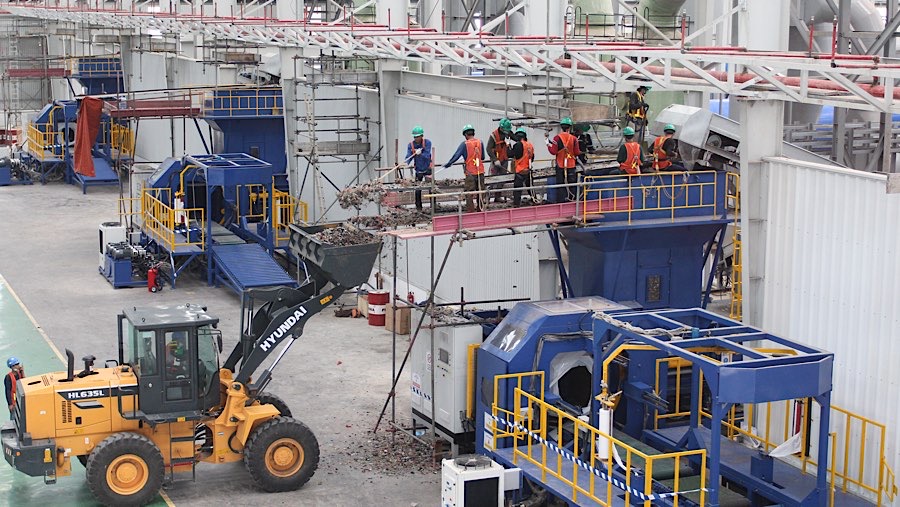
The Indonesian government’s decision to transfer control of the waste-to-energy initiative in Samarinda to the national investment authority Danantara marks a pivotal development in the country’s approach to urban waste management and renewable energy infrastructure. The Danantara waste-to-energy project reflects broader policy shifts aimed at centralizing strategic investments, standardizing waste conversion technologies, and accelerating the transformation of municipal waste into electricity. This move also resulted in the cancellation of a previously negotiated collaboration with a South Korean investor, underlining the complexities of aligning local ambitions with national frameworks.
This article examines the context, policy drivers, technological considerations, economic impact, and future prospects of the Danantara waste-to-energy project, exploring how Indonesia is navigating one of its most pressing environmental and energy challenges.
Centralization of Strategic Projects and Policy Rationale
At the core of the Danantara waste-to-energy project is a regulatory shift introduced by the Indonesian government in 2026 that mandates all waste-to-energy initiatives, formally known as Pembangkit Listrik Tenaga Sampah (PLTSa), to be executed through a centralized investment mechanism under Danantara. This framework aims to ensure uniform standards in technology adoption, financing structures, and governance, as well as to strengthen national oversight over strategic energy and environmental infrastructure.
Historically, local governments in Indonesia have pursued independent partnerships with foreign or private investors to develop waste management facilities. In the case of Samarinda, an ongoing negotiation with a South Korean investor was interrupted by the new requirement, leading to the termination of that collaboration and the transfer of project responsibilities to Danantara.
According to Desy Damayanti, Head of Samarinda’s Public Works and Spatial Planning Office, local authorities must now cede operational and investment authority for PLTSa projects to Danantara, while technical feasibility studies and documents developed by regional administrations will be forwarded to the centralized body. Despite this transition, the urgency of addressing waste volumes at the Sambutan landfill remains a priority for the new project custodian.
The centralization of control reflects a broader national strategy to strengthen Indonesia’s capability in managing waste-to-energy infrastructure as part of its renewable energy and environmental agenda. This initiative is aligned with Presidential Regulation No. 109 of 2025, which provides a formal legal basis for the adoption and scaling of waste-to-energy technologies across municipalities with significant waste streams.
Technological and Environmental Implications
The technical core of the Danantara waste-to-energy project involves converting municipal solid waste into usable electricity through advanced processing technologies. These technologies vary widely, including incineration, gasification, and refuse-derived fuel (RDF) systems, each with distinct efficiencies, emissions profiles, and capital requirements.
Danantara’s stewardship is intended to harmonize the selection and implementation of these technologies across multiple locations, ensuring that performance standards, environmental safeguards, and economic viability are consistent nationwide. The emphasis on standardization is designed to prevent fragmented technological deployment and to facilitate scalability, replicability, and knowledge transfer among participating regions.
One of the major arguments for waste-to-energy technology is its dual benefit of waste volume reduction and energy generation. Urban centers like Samarinda grapple with rising landfill volumes that strain existing waste management systems. By treating waste as an energy resource, municipalities can simultaneously ease landfill pressure and contribute to the national grid.
However, the adoption of waste-to-energy technologies also carries environmental debates. Critics often point to concerns over emissions from incineration processes, potential air quality impacts, and the need for robust emission control systems. Proponents argue that, with the right technology and regulatory enforcement, modern waste-to-energy facilities can operate within acceptable environmental parameters, reducing greenhouse gas emissions relative to conventional landfill decomposition and methane release.
Danantara’s role includes ensuring that environmental safeguards and technological solutions meet stringent performance criteria. Investing in state-of-the-art emission control technologies, real-time monitoring systems, and transparent reporting mechanisms can enhance public trust and support for these projects.
Economic and Investment Dynamics
The shift toward the Danantara waste-to-energy project also resonates with broader economic objectives, particularly in mobilizing capital for infrastructure that addresses both environmental challenges and energy demands. Danantara has signaled ambitious plans to develop multiple waste-to-energy facilities across Indonesia, with an investment horizon that spans several years and thousands of metric tons of waste processing capacity.
According to industry reports, the total investment required to deploy waste-to-energy facilities in as many as 33 locations nationwide could approach tens of trillions of Indonesian rupiah, reflecting the sector’s scale and its infrastructure intensity.
Danantara’s pivot toward centralized implementation has attracted interest from both domestic and international investors. Reports indicate that hundreds of entities have expressed willingness to participate in the broader waste-to-energy roll-out, showcasing the commercial appeal and growth potential of this sector.
Despite the initial cancellation of the cooperation with a South Korean investor in Samarinda, other tender processes have advanced, with selected technology providers and consortiums poised to engage in upcoming projects. Danantara’s framework aims to balance competitive selection with strategic partnerships that enhance technology transfer and local capabilities.
The economic value proposition for investors rests on anticipated returns from energy sales, waste processing fees, and long-term utility contracts. In some cases, agreements with state electricity firms ensure that energy generated from waste conversion is purchased at predetermined rates, bolstering revenue predictability for project stakeholders.
Social and Community Considerations
Beyond technology and investment, the Danantara waste-to-energy project holds significant social implications, particularly for communities living near landfill sites and future facility locations. Waste management challenges often disproportionately impact low-income neighborhoods, where persistent collection inefficiencies and open dumps present health and environmental risks.
By transitioning to waste-to-energy systems, municipalities can reduce landfill dependency and mitigate some of these localized hazards. However, community engagement, transparent communication, and responsive grievance mechanisms are essential to ensure that residents understand the benefits, risks, and long-term implications of facility operations.
Local governments and Danantara must also navigate public perceptions around waste-to-energy technologies. Successful deployment hinges on fostering community ownership and ensuring that tangible improvements in cleanliness, air quality, and local amenities are demonstrable.
Workforce development and training represent additional social dimensions. Operating advanced waste-to-energy facilities requires a skilled labor force that can manage technical systems and ensure safe, efficient operations. Investment in training programs and vocational pathways can help local workers participate in these emerging industrial activities.
Challenges and Pathways Forward
Despite the promise of the Danantara waste-to-energy project, several hurdles remain. Transitioning from decentralized local initiatives to a centralized model requires meticulous planning, coordination, and capacity building across regions. Ensuring that Danantara’s centralized framework responds to local needs without stifling innovation or responsiveness will be a key governance challenge.
Financing these projects also demands careful structuring. While nationwide interest is strong, tangible commitments from investors and lenders depend on clarity around regulatory guarantees, revenue frameworks, and risk mitigation strategies. Danantara’s emphasis on standardizing investment terms is intended to enhance confidence and reduce barriers, but success will hinge on execution.
Environmental monitoring and compliance will remain central concerns. Waste-to-energy technologies must be continuously evaluated to ensure emissions, effluent, and residual waste management meet national and international standards. Building robust environmental oversight into project governance will help sustain public trust and long-term viability.
Finally, the shift away from the initial Korean investment in Samarinda highlights the complex interplay between local aspirations and national policy mandates. Strategic communication, clear transition plans, and inclusive stakeholder engagement can minimize disruptions and maintain project momentum.
Read More