





 Thursday, 18-06-26








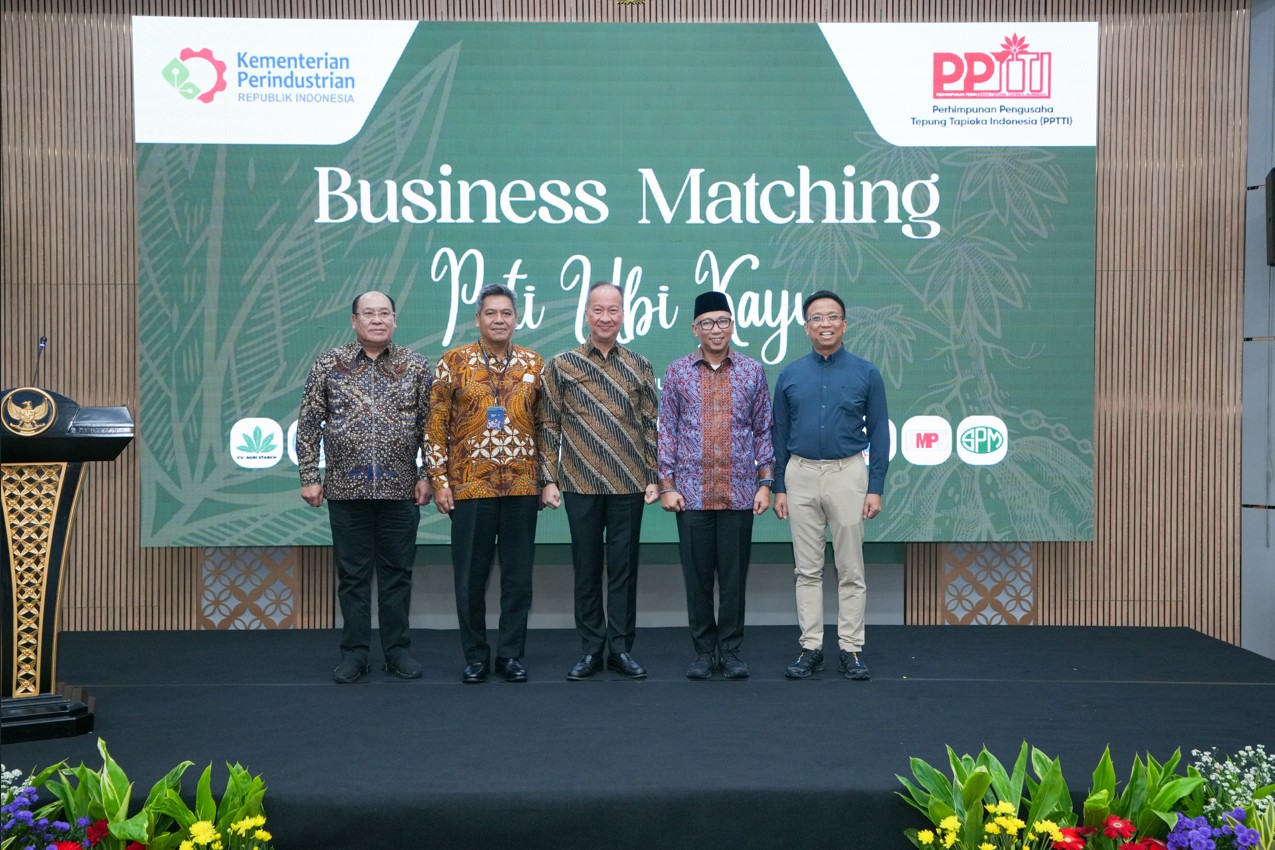
The Ministry of Industry (Kemenperin) is promoting the development and competitiveness of Indonesia’s cassava starch industry through diversification of product specifications, import substitution, and strengthening of the supply chain (22/01).
Kemenperin, together with the Indonesian Tapioca Flour Entrepreneurs Association (PPTTI), organized a Cassava Starch Business Matching forum to expand the domestic market and connect starch producers with industrial users.
Business Matching to Optimize Domestic Supply
The initiative aims to ensure that domestic cassava starch demand is met optimally by local products.
This approach aligns with the National Industrial Strategy (SBIN), based on President Prabowo Subianto’s Asta Cita, which emphasizes both backward and forward linkages to create an integrated and efficient industrial value chain.
Domestic Industry Shows Market Potential
Currently, Indonesia has 125 cassava starch companies operating at a 43 percent utilization rate.
“These companies have already captured 79 percent of the domestic market. We are optimistic that the cassava starch industry can be strengthened and penetrate broader markets,” said Minister of Industry Agus Gumiwang Kartasasmita during the forum in Jakarta (22/01).
Cassava starch is a strategic commodity with high added value. It serves as a raw material for food products such as sweeteners, seasonings, snacks, and noodles, as well as non-food products including paper, chemicals, and ethanol.
Export Growth Amid Industry Challenges
The sector achieved significant export growth, with cassava starch exports reaching US$18.7 million in November 2025, marking a 58.34 percent increase from the previous year.
Despite the sector’s potential, challenges remain, particularly competition in price and quality from imported products.
“To respond to this, Kemenperin encourages stronger synergy between cassava starch producers and industrial users, including through the Commodity Balance mechanism,” added the minister.
Lampung as a Hub for Tapioca Industry Diversification
The business matching event brought together 17 cassava starch producers from Lampung Province and 51 prospective buyers, including two industry associations and 49 industrial users in food and non-food sectors.
The forum used one-on-one business meetings divided into three sessions.
Acting Director General of Agro Industry Putu Juli Ardika expressed hope that partnerships between producers and users would continue to grow, supporting domestic industry independence.
Lampung Governor Rahmat Mirzani Djausal reaffirmed the province’s commitment to develop high value-added tapioca products.
“Through this Business Matching, we hope it will create real commitments, long-term partnerships, and accelerate national economic growth,” he said.
PHOTO: MINISTRY OF INDUSTRY
This article was created with AI assistance.
We make every effort to ensure the accuracy of our content, some information may be incorrect or outdated. Please let us know of any corrections at [email protected].
Read More