





 Friday, 19-06-26








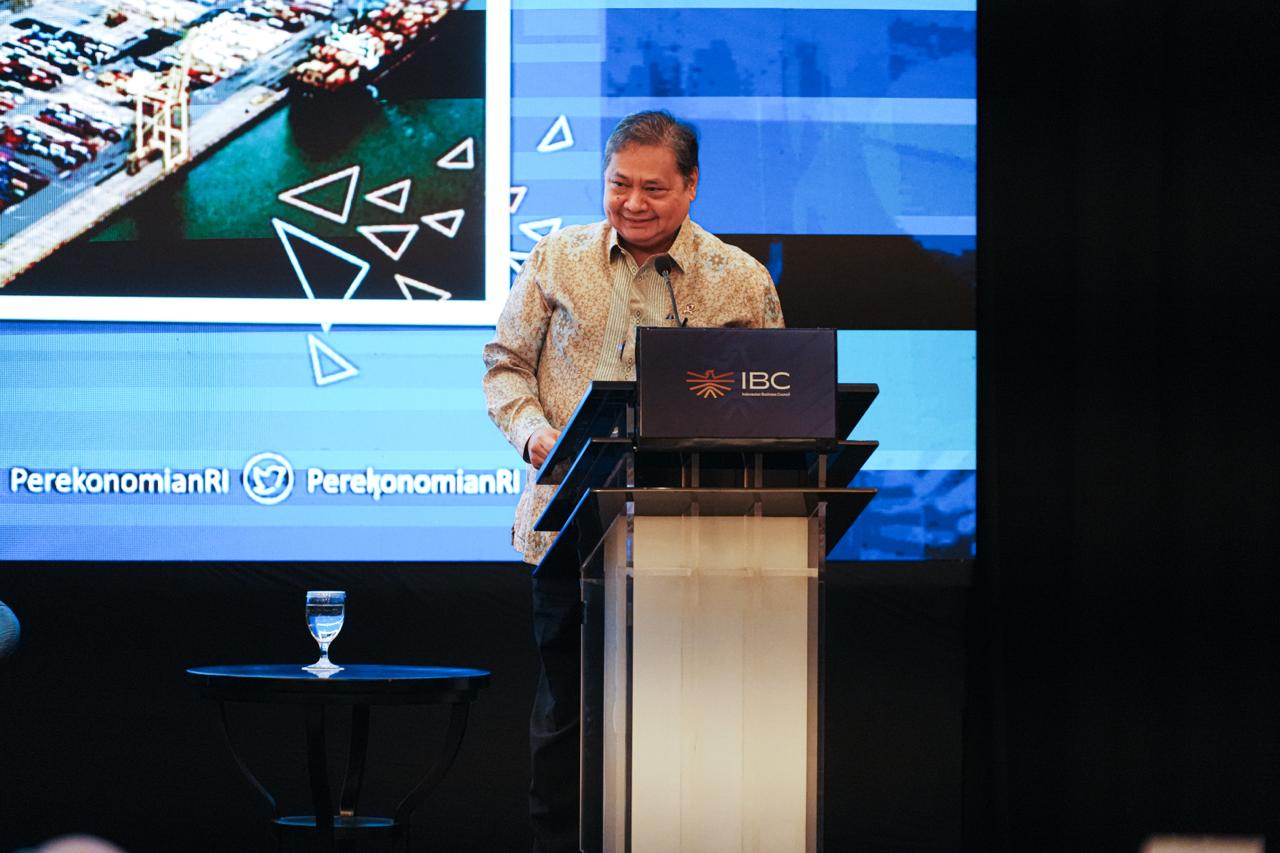
The Indonesian government has expressed confidence that the country’s economy will remain resilient despite rising global geopolitical tensions and slowing world economic growth (14/01).
Authorities emphasize that adaptive and consistent policies with a medium- to long-term focus are essential to maintain economic stability and growth momentum.
Coordinating Minister for Economic Affairs Airlangga Hartarto delivered this message during his keynote speech at the IBC Business Outlook 2026 forum organized by the Indonesian Business Council in Jakarta.
Low Recession Risk and Stable Growth Highlight Economic Strength
Airlangga noted that Indonesia’s economy continues to be resilient with a relatively low risk of recession compared to major global economies.
“I think amid global uncertainty stemming from economic slowdown and rising geopolitical tensions, Indonesia’s economy remains resilient with a relatively low recession risk, based on Bloomberg, compared with the United States, China, and Japan,” he said.
Over the past seven years, Indonesia has consistently recorded economic growth of around 5%, resulting in cumulative growth of about 35%. Macroeconomic stability remains strong, with inflation in December 2025 at 2.92%.
Positive Trends in Financial Markets, Trade, and Investment
Indonesia’s financial markets show continued positive performance, with stock indices reaching record highs and the rupiah remaining relatively stable.
Real sector activity is still expanding, reflected in a manufacturing PMI of 51.2 and a consumer confidence index of 123.5.
Externally, Indonesia maintains a solid position with a trade surplus and foreign exchange reserves totaling USD 156.1 billion.
Bank credit growth is near 8%, while foreign direct investment has increased, demonstrating confidence in Indonesia’s long-term economic prospects.
Fiscal Discipline and Economic Stimulus Support Growth
Airlangga emphasized that the state budget remains a credible and responsible policy instrument. The 2025 fiscal deficit is kept below 3%, and government debt levels are under control.
Throughout 2025, the government implemented economic stimulus packages worth Rp110.7 trillion to support consumer purchasing power and national growth.
Looking ahead, Indonesia targets 5.4% economic growth in 2026, driven by real sector strengthening, policy packages, and eight national priority programs.
Strategic Focus on Human Capital, Digital Economy, and Key Industries
Government priorities include strengthening food and energy security and empowering micro, small, and medium-sized enterprises to create millions of jobs annually.
The state budget also supports education, social protection, workforce training, and facilitating the placement of workers overseas in strategic sectors.
In digital transformation, Indonesia promotes regional digital economic growth through the ASEAN Digital Economy Framework Agreement and expands QRIS digital payments regionally and internationally to improve financial inclusion and digital literacy.
Investment climate improvements continue through regulatory simplification and faster implementation of national strategic programs.
Labor-intensive industries, such as textiles, electronics, and export-oriented manufacturing, remain a focus to sustain competitiveness and protect millions of domestic workers.
PHOTO: COORDINATING MINISTRY FOR ECONOMIC AFFAIRS
This article was created with AI assistance.
We make every effort to ensure the accuracy of our content, some information may be incorrect or outdated. Please let us know of any corrections at [email protected].
Read More