





 Sunday, 26-07-26








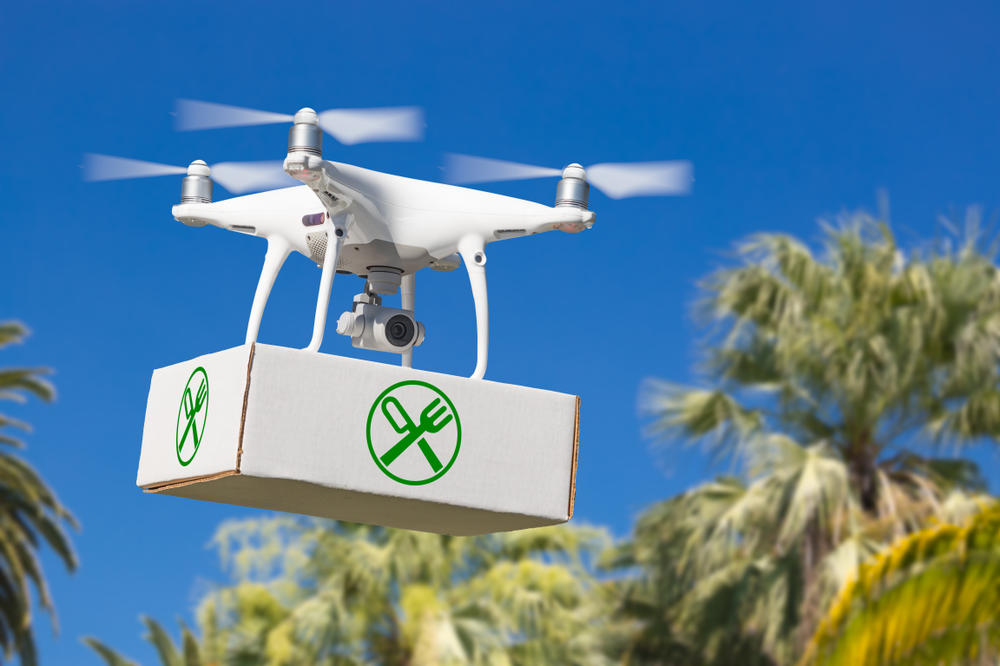
Drone food delivery is no longer a futuristic concept reserved for tech conferences or sci fi films. Over the past five years, it has entered real commercial ecosystems in several countries and is steadily becoming a new frontier for logistics, food delivery platforms, and urban mobility designers. As cities confront worsening congestion, rising last mile costs, and higher consumer expectations for speed, drone food delivery is positioning itself as a high growth solution that promises convenience, efficiency, and reduced operational friction. The question is no longer whether drones will participate in the delivery economy, but when and where the model can scale sustainably, especially for fast growing regions like ASEAN.
The rise of drone food delivery has been driven by rapid advancements in lightweight materials, improved battery life, and better reliability of autonomous flight systems. These improvements intersect with growing consumer demand for near instant gratification and the pressure on delivery companies to cut operational expenses. Major global operators like Wing, Zipline, Flytrex, and Meituan have proven that drones can deliver meals and small grocery items safely and quickly within distances suited for urban and semi suburban environments. Their experience offers important lessons for ASEAN nations preparing to modernize their own delivery networks.
Below is a comprehensive look at how drone food delivery currently operates, which countries have adopted the technology, and what the probability looks like for future expansion in ASEAN, especially Indonesia.
Global Adoption And Operational Progress
Drone food delivery gained momentum in the United States and Australia, where companies like Wing and Flytrex built commercial pilots into daily operating systems. In Australia, consumers in certain cities can already order lunch or coffee and have it delivered by drone within minutes. The United States has also moved forward with controlled commercial rollouts in several states, where drone operations function in partnership with food delivery platforms and large retailers.
China is now considered the fastest moving drone delivery market in Asia. Companies developing these services have tested and scaled drone food delivery routes across major cities. Their systems rely on a network of micro hubs, rooftop stations, and geofenced corridors that allow drones to move efficiently above congested streets. This has created thousands of successful deliveries and demonstrated that commercial viability is possible when the right regulatory and technical conditions exist.
Japan has taken a different approach by adopting drones for medical and remote island logistics first before moving toward consumer deliveries. These cases prove that drones can operate safely under strict regulations and can support both commercial and critical public needs.
Africa also offers an interesting case study. Although not focused on food delivery, drone logistics led by Zipline have shown that commercial scale drone networks are feasible, even in challenging terrains. Their success provides valuable insights for ASEAN nations with complex geographies such as Indonesia and the Philippines.
ASEAN Momentum And Early Commercial Tests
Southeast Asia has begun experimenting more actively with drone food delivery during the past three years. Singapore has run high profile trials involving engineering companies and large delivery platforms, demonstrating that urban island environments are ideal for controlled drone delivery systems. These trials have shown that drones can cut delivery times significantly and create new efficiencies for short distance transport in limited land areas.
The Philippines has also moved quickly. Local partnerships between delivery platforms and government agencies have tested drone food delivery inside large township developments. These environments simulate real consumer behavior while remaining controlled enough for safe testing.
Thailand has positioned itself as a testbed for drone regulation and unmanned traffic management. The country has run demonstrations to explore how drones could support logistics, including food and parcel delivery. With clear regulatory communication and strong government interest, Thailand is likely to move forward with larger commercial pilots soon.
Malaysia has explored cross border collaborations and research driven drone initiatives. Although food delivery is not yet commercial, several feasibility projects indicate growing interest from both public and private stakeholders.
Taken together, ASEAN is moving toward broader adoption. Several countries have validated the concept through real world trials, showing that the ecosystem is preparing for wider deployment.
Indonesia’s Readiness And Market Potential
Indonesia is one of the most promising future markets for drone food delivery. Its large population, rapidly growing digital economy, and heavy reliance on food delivery platforms create an ideal environment for the model to thrive. However, Indonesia’s regulatory environment is still evolving, and commercial drone food delivery has not yet launched at scale.
The Ministry of Transportation has taken steps toward allowing future drone operations by developing clearer frameworks for permissions, digital applications for flight approvals, and draft guidelines for beyond visual line of sight operations. Indonesia aims to build a foundation for advanced air mobility over the next several years. Once regulations are finalized and unmanned traffic management systems are implemented, drone food delivery will have a clearer path.
Market forecasts indicate that Indonesia’s drone delivery market could grow significantly between 2025 and 2031. Demand will come from urban centers where road congestion is a major barrier for food delivery platforms. Drone food delivery could offer faster service in areas where traditional couriers face delays. Resorts, campuses, and industrial estates could be the earliest adopters because these areas are easier to regulate and control.
Another opportunity lies in Indonesia’s archipelagic geography. Islands with high tourism activity could benefit from drone food delivery, especially for premium services or remote hospitality areas. This allows operators to start with niche markets and later expand to broader urban zones.
Based on current regulatory development, market readiness, and regional momentum, a moderate adoption scenario is the most realistic. Under this scenario, regular drone food delivery services could appear in select Indonesian zones between 2026 and 2030. These zones would likely include controlled environments, new townships, and areas where local governments actively support drone technology trials.
Economic Implications And Industry Impact
If drone food delivery scales in Indonesia or ASEAN, the economic impact would be significant. Delivery companies could reduce long term human labor costs in certain segments, while increasing speed and consistency in fulfillment. Restaurants might benefit from lower delivery fees during non peak hours, thanks to more predictable drone operations. For consumers, faster delivery could enhance brand loyalty and reshape expectations for urban convenience.
Drone manufacturers, battery suppliers, software developers, and traffic management platforms would all gain new economic opportunities. This creates a multiplier effect that strengthens the region’s position in the global drone economy.
However, economic feasibility will depend on density. Drone food delivery works best in areas with high order volumes and short travel distances. Indonesia will need to identify ideal zones where drone operations can reduce cost per delivery while meeting safety and regulatory requirements.
Environmental impact also plays a role. Drones generate fewer emissions per delivery compared with motorcycles, especially when powered by renewable energy grids. As Indonesia invests more in sustainability, drone food delivery could support national goals for cleaner transportation.
Regulatory Challenges And Public Acceptance
Despite the clear potential, significant challenges remain. Drone food delivery requires strict safety standards, reliable traffic management, and clear airspace rules. Drones flying over dense cities must avoid hazards, protect privacy, and guarantee consistent performance. Public acceptance is another factor. Noise, safety concerns, and privacy questions will influence how quickly communities support drone operations.
Governments across ASEAN are working to address these issues. Indonesia is developing systems for remote identification, standardized drone corridors, and streamlined approvals. These steps are essential for building public trust and enabling commercial operators to expand responsibly.
Drone food delivery is on the path to becoming a transformative force in global logistics. Its early success in the United States, Australia, China, and Japan proves that the technology is capable of scaling under the right conditions. ASEAN nations are moving in the same direction, and the region is now preparing for broader adoption through trials, regulatory development, and strong private sector interest.
Indonesia stands at a promising position. With a young digital population, a thriving delivery economy, and supportive early stage government initiatives, the country could become one of the most significant drone food delivery markets in Southeast Asia. While broad citywide adoption will require time, infrastructure, and careful regulation, the trajectory is clear. Drone food delivery is coming, and Southeast Asia is getting ready.
Read More