





 Tuesday, 09-06-26








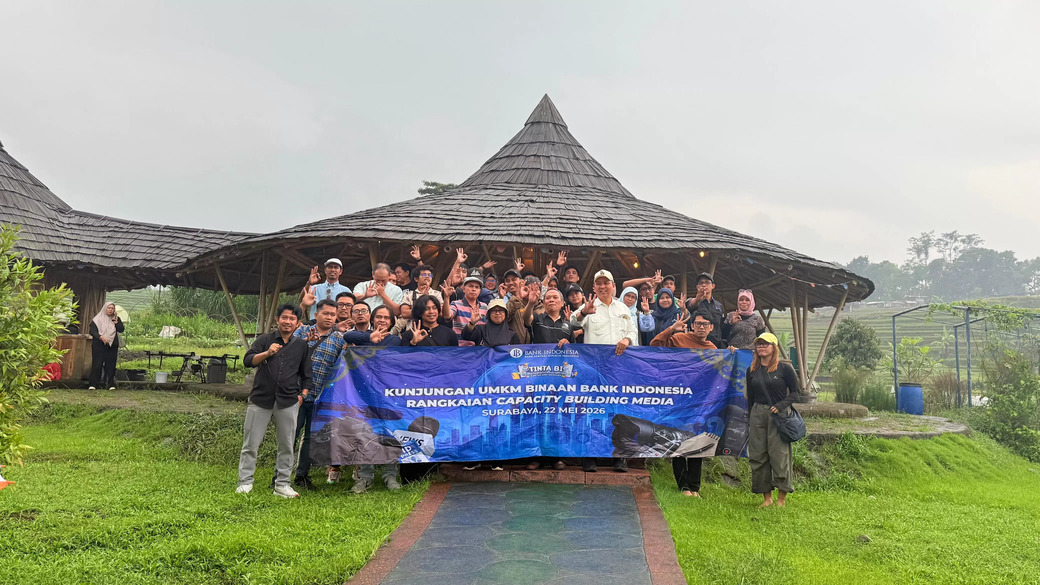
In East Java, a small organic community has turned into something much bigger than a farming project. Brenjonk, the organic farming village in Penanggungan, Trawas, Mojokerto, has evolved into a community enterprise that now supplies modern retail, hotels, restaurants, and catering networks across the region. Its story shows how a village-based agricultural model can move beyond local production and become a commercially viable supply system.
The most interesting part is not only that Brenjonk sells organic produce, but that it does so through a structured value chain. The community manages production, post-harvest handling, organic certification, packaging, promotion, and distribution. That kind of end-to-end control is what allows an organic farming village to compete in premium markets where consistency matters as much as taste or price.
Just as important, the group’s growth has been shaped by Bank Indonesia support since 2018. According to the community’s founder, that backing has helped strengthen human resources, organic farming schools, and agricultural technology use. It has also supported infrastructure and access roads that helped the area grow into an education and culinary destination.
How Brenjonk Built A Market-Ready Organic Farming Village
Brenjonk did not become a recognized organic farming village overnight. The community was founded in 2007 and now has 109 members, with about 80 percent of them being housewives and the rest consisting of young people and farmers. From the beginning, the group was designed around three priorities: health, economy, and the environment. That mission gave it a wider purpose than standard crop production.
What sets Brenjonk apart is its discipline. The community operates from upstream to downstream, which means it does not stop at cultivation. It manages harvest handling, organic certification, packaging, promotion, and selling. It also applies an internal control system to keep standards consistent across members, a crucial step for any organic farming village that wants access to premium retail shelves.
The results are visible in the market. Once the products received organic certification, they were able to enter modern retail organic sections, which the community sees as a source of pride and proof that farmers can reach premium consumers. That certification is not just a label. It is a commercial passport that opens the door to higher-value buyers and more stable demand.
Brenjonk also shows that a village enterprise can move beyond pure agriculture and into value-added business. The area now includes culinary activity that uses local organic ingredients, turning raw harvests into food products with higher margins. The community says this shorter, integrated supply model helps increase value because a kilogram of organic rice can earn far more once it is processed into dishes for visitors and customers.
Bank Indonesia Support Helped Scale The Model
Bank Indonesia’s involvement is a major reason Brenjonk’s organic farming village gained scale and credibility. The community says BI has supported development since 2018, with assistance focused on capacity building, school-field training, and agricultural technology. That kind of support matters because small rural enterprises often struggle not with production alone, but with the systems required to sustain quality and expand demand.
One of the more practical forms of support was a drone sprayer for crop management. According to the community, the drone helps apply liquid fertilizer and care for crops more efficiently. BI also supported educational organic development and access roads to the agricultural area, which helped the site grow into an eco-tourism and culinary destination.
This is where the Brenjonk case becomes more than a local success story. It shows how institutional support can help an organic farming village move from informal activity into a structured rural economy. With training, infrastructure, and technology, the community has been able to build a more reliable system for production and outreach. That system is what makes modern retail access possible.
BI’s role also fits its broader mandate. Bank Indonesia has long supported payment systems, financial inclusion, green finance, and MSME development as part of its core functions. Brenjonk sits naturally within that broader agenda because it combines community livelihoods, sustainable production, and local economic resilience.
The scale of the community’s impact is no longer small. From 2013 to 2025, Brenjonk says it trained around 9,617 participants from different regions. It also mentors 109 organic cadres in five villages, with most participants being women and youth. That makes the organic farming village model important not only as a business, but also as a social platform for skills transfer and rural empowerment.
Why Modern Retail Wants Suppliers Like Brenjonk
Modern retail wants more than product variety. It wants reliability, traceability, standardization, and consistent supply. Brenjonk appears to have understood that early. Its certified organic rice, red rice, black rice, and a wide range of horticulture products are now being delivered to supermarkets in East Java and Surabaya, including premium retail chains. The community says monthly shipments average 2 to 3 tons, and can rise to 5 to 10 tons during the peak harvest season.
This matters because it shows how an organic farming village can compete in a retail environment that usually favors larger, more industrial suppliers. Brenjonk is not winning by scale alone. It is winning through process discipline, product quality, and a story that resonates with consumers who increasingly want safer food and clearer sourcing.
The pricing advantage also helps. Brenjonk says organic white rice can sell for around Rp15,000 per kilogram, while red rice can reach Rp27,000 to Rp28,000 and black rice around Rp30,000 per kilogram. Those are meaningful premiums for farmers, especially when compared with conventional commodity pricing. The premium is what makes the organic farming village model economically attractive, not just environmentally admirable.
Brenjonk’s broader product mix also helps reduce dependency on a single crop. The group manages around 18 hectares of certified organic land, with paddy plots and home gardens, and grows roughly 45 horticultural products including spinach, kailan, mustard greens, lettuce, tomatoes, cucumbers, bananas, and tubers. This diversity makes the business more resilient and better suited to modern retail demand, which often requires steady supply across categories.
There is also a tourism dimension. Brenjonk attracts around 8,500 visitors a month, generating roughly Rp300 million in monthly economic turnover. That means the organic farming village is not only selling produce, but also creating a destination economy where education, food, and agriculture reinforce one another. The model is stronger because it does not rely on one income stream.
A Rural Business Model With National Lessons
Brenjonk’s story offers a useful template for other rural communities. The first lesson is that an organic farming village needs more than fertile land. It needs governance, training, certification, logistics, and market access. Without those pieces, organic agriculture often remains a hobby or a niche project. With them, it can become a scalable business.
The second lesson is that sustainability and profitability do not have to be opposites. Brenjonk has made environmental stewardship part of its commercial identity. It uses natural microbes to maintain soil fertility, reduce dependence on chemical fertilizers, and protect water sources in Trawas. In other words, the community treats organic farming as both a climate strategy and a market strategy.
The third lesson is that partnerships matter. BI did not simply fund a one-off project. It helped create capacity, visibility, and a pathway into larger markets. For any organic farming village that wants to enter modern retail, that kind of support can be decisive. It helps bridge the gap between local production and national distribution.
Brenjonk has therefore become a strong example of what rural enterprise can look like when community discipline meets institutional support. It is still a village-based initiative, but it now speaks the language of premium retail, tourism, and sustainable business. That combination is rare, and it is exactly why the Brenjonk case is worth watching.
Read More