





 Monday, 25-05-26








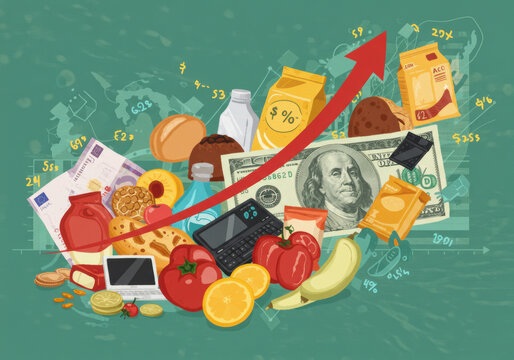
Global food prices are once again under pressure, rising sharply as geopolitical tensions in the Middle East disrupt supply chains and trigger market uncertainty. The escalation of conflict in the region has sent shockwaves through global commodity markets, highlighting the fragile balance between food security, energy prices, and geopolitical stability.
The surge in global food prices is not happening in isolation. It reflects a complex interplay of factors including supply disruptions, rising transportation costs, and speculative market behavior. For countries heavily dependent on imports, including many in Southeast Asia, the implications are significant.
As the situation evolves, governments and businesses are closely monitoring the trajectory of global food prices, aware that prolonged volatility could lead to inflationary pressures and economic instability.
How Geopolitical Conflict Drives Global Food Prices
The Middle East plays a critical role in global trade, particularly in energy markets. When conflict escalates in the region, the immediate impact is often seen in oil prices. Higher energy costs translate directly into increased production and transportation expenses for food commodities.
This chain reaction is a key driver of rising global food prices.
Fertilizer production, for instance, is heavily dependent on natural gas. When energy prices increase, fertilizer costs follow, raising the overall cost of agricultural production. Farmers are then forced to pass these costs onto buyers, contributing to higher global food prices.
Shipping routes are also affected. Key maritime corridors in the Middle East are vital for global trade. Any disruption or perceived risk can lead to higher insurance premiums and shipping costs, further pushing up global food prices.
In addition, geopolitical uncertainty often triggers speculative trading in commodity markets. Investors tend to hedge against risk by increasing their positions in agricultural commodities, which can amplify price volatility.
The result is a rapid escalation in global food prices that can spread across markets within a short period.
Impact on Emerging Economies and Indonesia
Emerging economies are particularly vulnerable to fluctuations in global food prices. Many of these countries rely on imports to meet domestic demand, making them sensitive to external shocks.
Indonesia, for example, imports several key food commodities including wheat and soybeans. When global food prices rise, the cost of these imports increases, putting pressure on domestic prices and inflation.
For consumers, this translates into higher food costs, which can disproportionately affect lower income households. Food expenditure accounts for a significant portion of household budgets in developing countries, making price increases especially impactful.
For governments, rising global food prices present policy challenges. Authorities must balance the need to maintain price stability with fiscal constraints. Measures such as subsidies, price controls, and strategic reserves are often used to mitigate the impact, but these solutions are not always sustainable in the long term.
Businesses across the food supply chain also feel the pressure. Manufacturers, distributors, and retailers must navigate higher input costs while maintaining competitive pricing. This can lead to margin compression and operational challenges.
In Indonesia’s case, the government has historically intervened to stabilize food prices through import policies and market operations. However, prolonged increases in global food prices could test the effectiveness of these measures.
Supply Chain Disruptions and Market Volatility
The current surge in global food prices underscores the vulnerability of global supply chains. Modern food systems are highly interconnected, relying on complex networks that span multiple countries and regions.
When a key node in this network is disrupted, the effects can be far reaching.
The Middle East conflict has introduced uncertainty into shipping routes and logistics operations. Even minor disruptions can cause delays, leading to supply shortages in importing countries. These shortages, in turn, drive up global food prices.
Weather conditions and climate factors also play a role. In recent years, extreme weather events have affected agricultural output in various parts of the world. When combined with geopolitical disruptions, these factors create a perfect storm for rising global food prices.
Another contributing factor is the concentration of production in certain regions. For example, a significant portion of global wheat exports comes from a small number of countries. Any disruption in these regions can have a disproportionate impact on global food prices.
Market volatility is further amplified by policy responses. Export restrictions, for instance, can exacerbate supply shortages and push prices higher. While such measures are intended to protect domestic markets, they often have unintended consequences at the global level.
Long Term Implications for Food Security
The sustained increase in global food prices raises concerns about long term food security. As prices rise, access to affordable food becomes more challenging, particularly for vulnerable populations.
Food insecurity is not just a humanitarian issue. It also has economic and social implications. Rising global food prices can lead to increased poverty, social unrest, and political instability in extreme cases.
For policymakers, the current situation highlights the importance of building resilient food systems. This includes diversifying supply sources, investing in local agriculture, and improving storage and distribution infrastructure.
Technological innovation can also play a role. Advances in agricultural technology, such as precision farming and climate resilient crops, can help mitigate the impact of external shocks on food production.
International cooperation is equally important. Addressing the challenges associated with global food prices requires coordinated efforts across countries and institutions. This includes maintaining open trade channels, sharing information, and supporting vulnerable regions.
Navigating the Future of Global Food Prices
Looking ahead, the trajectory of global food prices will depend on several factors, including the duration and intensity of the Middle East conflict, energy market dynamics, and policy responses.
If geopolitical tensions persist, upward pressure on global food prices is likely to continue. Conversely, a de escalation could stabilize markets and ease price pressures.
For businesses, adaptability will be key. Companies need to develop strategies to manage cost volatility, such as diversifying suppliers and optimizing supply chains.
For governments, proactive policy measures will be essential. This includes strengthening food reserves, supporting domestic production, and implementing targeted assistance programs for vulnerable populations.
Ultimately, the current surge in global food prices serves as a reminder of the interconnected nature of the global economy. Events in one region can have far reaching impacts, affecting food security and economic stability worldwide.
As the world navigates this period of uncertainty, the focus will be on building systems that are not only efficient but also resilient. Ensuring stable and affordable access to food will remain a top priority for governments, businesses, and communities alike.
Read More