





 Monday, 29-06-26








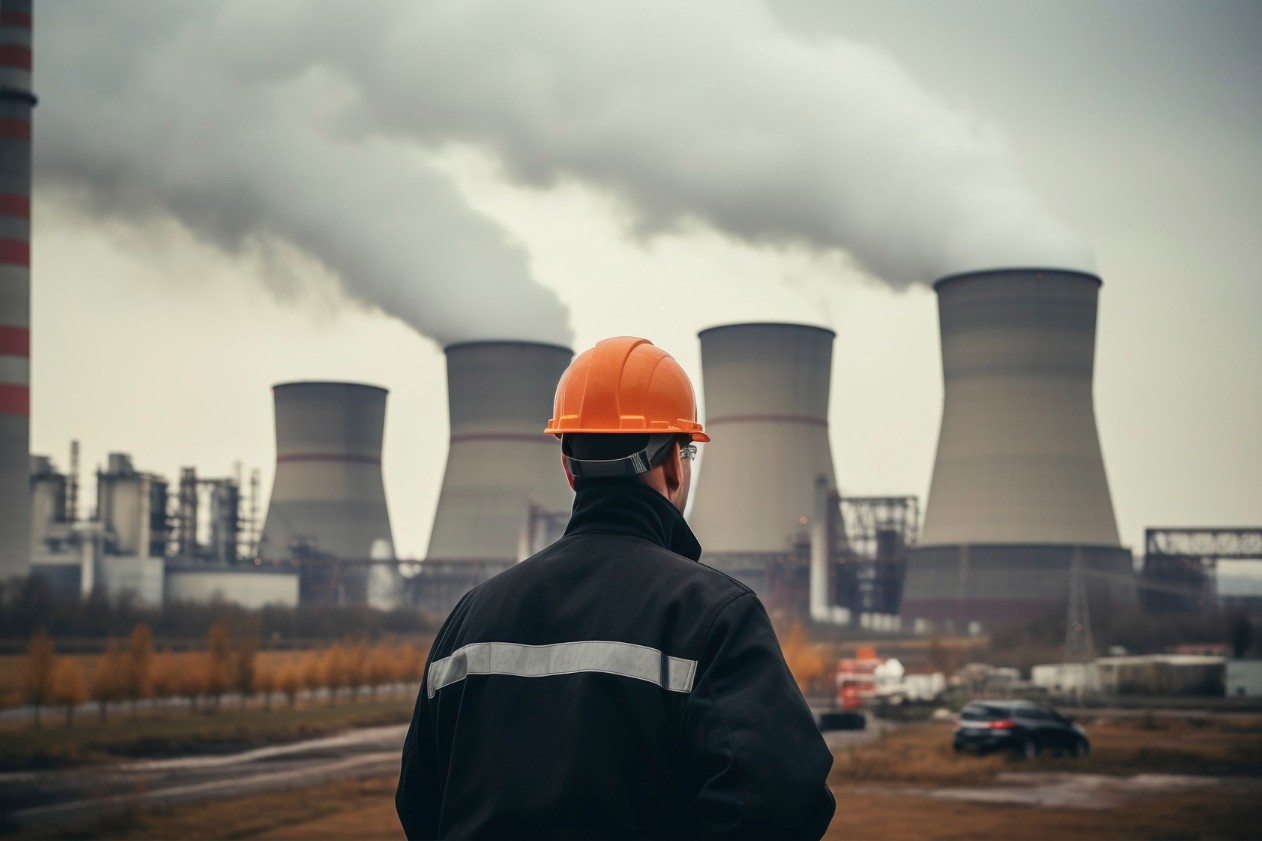
Indonesia plans to operate its first nuclear power plant (PLTN) between 2032 and 2034, according to the Electricity Supply Business Plan (RUPTL) 2025–2034.
Dadan Kusdiana, Secretary General of the National Energy Council (DEN), said the initial plant will have a capacity of at least 500 megawatts (MW) and will start operating in 2032.
He emphasized that nuclear energy is no longer the last option in Indonesia’s energy strategy, but a key component to balance the country’s primary energy mix and achieve net-zero emissions.
"The RUPTL 2025–2034 target is an initial nuclear power plant capacity of 500 megawatts. This will be deployed strategically starting in 2032, whether in the Sumatra or Kalimantan electricity systems," Dadan said during the opening of the Workshop on Small Modular Reactor Deployment Considerations for Indonesia on March 3, 2026.
Potential Locations: Sumatra and Kalimantan
The government has identified Sumatra and Kalimantan as potential sites for the first nuclear power plants.
Dadan stressed that site selection will follow strict safety and environmental standards.
"First, regarding location, we have identified several potential sites across the archipelago. Our principle is simple: we will only proceed with locations that meet the strictest safety and environmental standards," he said.
Small Modular Reactors as Key Technology
Indonesia plans to develop Small Modular Reactor (SMR) technology for its nuclear energy program.
SMRs are seen as suitable for an archipelagic country because they can be deployed in remote areas and integrated into smaller regional power grids or industrial zones.
"For an archipelagic country like Indonesia, SMR technology offers a transformative solution. Unlike large-scale reactors, SMRs provide flexibility to be deployed in remote areas and integrated into smaller regional electricity networks," Dadan said.
Long-Term Nuclear and Hydrogen Plans
Indonesia aims to expand nuclear energy capacity to 44 gigawatts (GW) by 2060. Of this, 35 GW will be used for electricity generation, and 9 GW will support hydrogen production starting in 2045.
International Cooperation on SMR Development
Indonesia, the United States, and Japan organized a three-day conference on March 3–5, 2026, in Jakarta to discuss SMR deployment.
The event involved government officials, industry leaders, and technical experts from the three countries. It is part of the U.S. Department of State’s Foundational Infrastructure for Responsible Use of Small Modular Reactor Technology (FIRST) program, with Japan as a contributing partner.
Dadan highlighted the benefits of nuclear energy for stable, low-emission power and long-term economic growth.
"Nuclear offers a stable, low-emission energy solution and can support long-term economic growth. With advancements such as SMR technology, nuclear development is becoming more adaptive and relevant for developing countries," he said.
Representatives from the United States and Japan also emphasized their support for Indonesia’s nuclear ambitions through expertise, technology, and continued collaboration.
PHOTO: FREEPIk
This article is a summary of several original articles. The full versions can be read at the following links:
https://www.cnbcindonesia.com/news/20260303144041-4-715581/ri-targetkan-pembangkit-nuklir-terbangun-2032-ini-potensi-lokasinya
https://id.usembassy.gov/id/indonesia-amerika-serikat-dan-jepang-selenggarakan-konferensi-tentang-penerapan-reaktor-modular-kecil-nuklir/
This article was created with AI assistance.
We make every effort to ensure the accuracy of our content, some information may be incorrect or outdated. Please let us know of any corrections at [email protected].
Read More