





 Saturday, 20-06-26








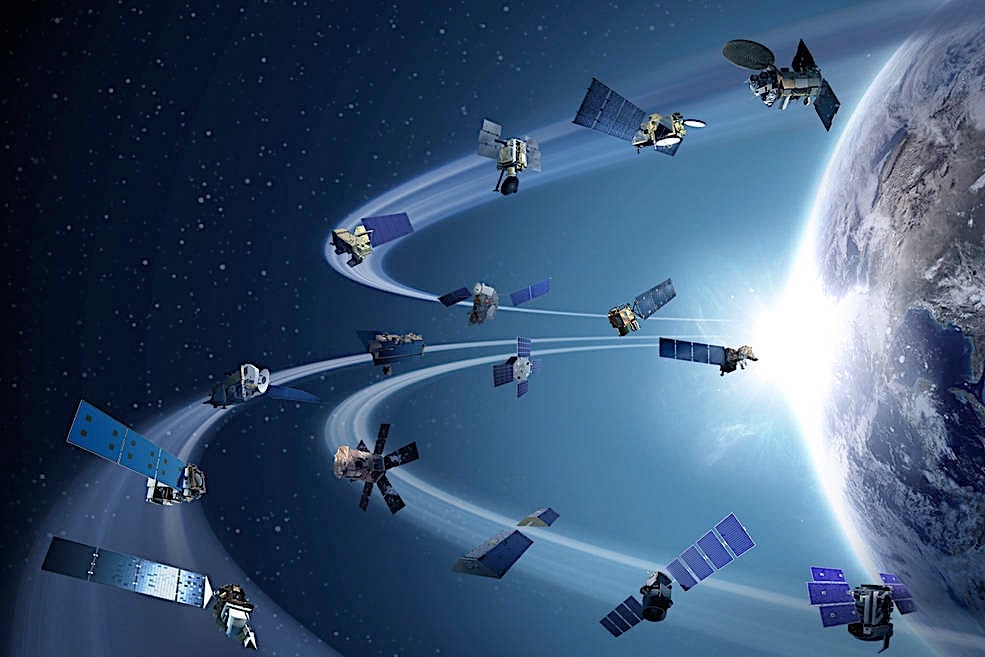
In a significant development in the global space and telecommunications arena, Russia is preparing to launch a new Rassvet satellite internet constellation aimed at challenging the dominance of Elon Musk’s Starlink network. This initiative, endorsed by the Russian space agency Roscosmos and backed by domestic aerospace firms, marks a strategic push for national technological sovereignty, expanded broadband access, and geopolitical competitiveness. According to multiple sources, Russia plans to deploy more than 300 low Earth orbit (LEO) satellites by 2027 as part of Rassvet’s initial phase.
The Rassvet project reflects broader trends in space technology investment, diplomatic signaling, and efforts by nation-states to diversify beyond U.S.-led satellite internet systems. This article explains the motivation behind the Rassvet satellite internet constellation, its expected timeline and capabilities, comparison with Starlink, and broader implications for global connectivity and geopolitical competition.
The Strategic Rationale Behind Rassvet
Russia’s project to build its own satellite internet network stems from a mix of strategic, military, and economic motivations. The existing global market for broadband satellite communications is heavily dominated by SpaceX’s Starlink constellation, a system that currently operates thousands of satellites in low Earth orbit, connecting millions of users across more than 150 countries.
However, Starlink is not officially available within Russia’s domestic market, and access has been restricted due to regulatory and geopolitical considerations. This has contributed to the Kremlin’s decision to develop an alternative that can secure sovereign control over satellite communication infrastructure and support both civilian and military applications.
One of the primary motivations is technological independence. Observers have noted that reliance on foreign satellite systems poses security vulnerabilities, especially in contexts of international conflict or sanctions. Developing a domestic constellation allows Russia to provide reliable broadband access across its vast territory, including remote regions with limited terrestrial connectivity. A locally developed system also reduces dependency on Western or foreign satellite technologies that might be subject to export controls or service restrictions during geopolitical tension.
Beyond national security, there is an economic motivation. Expanding broadband connectivity across remote and underserved regions can facilitate economic activity, support digital inclusion, and potentially enable new business models for Russian telecommunication companies. The Rassvet satellite internet constellation could underpin services ranging from remote business operations to maritime and aviation communications.
Technical Design and Deployment Strategy
The Rassvet network is planned as a constellation of low Earth orbit satellites, similar in design and ambition to Starlink. Operating in LEO provides several advantages over traditional geostationary satellites, including lower latency, higher data throughput, and reduced signal lag — key attributes for broadband internet services.
In practical terms, Russia intends to begin serial production of the Rassvet satellites and associated hardware in 2026. These satellites, often referred to in local media as “Zorkiy” units, are designed to form the backbone of the new network. By 2027, more than 300 of these satellites are expected to be launched into orbit, ensuring that the initial constellation is fully operational.
The rollout plan reflects a phased approach. The first operational satellites are scheduled to be deployed starting in 2026, with continuing launches through 2027. This initial deployment is designed to establish functional coverage and allow Russia to begin services targeting both domestic users and, potentially, international partners.
Eventually, Russian authorities and aerospace companies have discussed ambitions for even larger constellations over the longer term, potentially numbering in the high hundreds or thousands of satellites by the mid-2030s. These projections align with global megaconstellation trends, though specific figures and timelines may evolve depending on funding, technology development, and regulatory environments.
Comparing Rassvet and Starlink
At its core, the Rassvet satellite internet constellation seeks to mirror many aspects of Starlink’s architecture. Both systems rely on large LEO constellations that orbit at relatively low altitudes compared to geostationary satellites. This positioning reduces latency and enables faster data transmission speeds, making them well-suited for broadband internet services in areas without robust ground infrastructure.
Starlink, operated by SpaceX, has already established a significant global footprint, launching thousands of satellites and serving millions of users worldwide. It has become an essential tool not just for commercial users but also for mission-critical communications in remote and conflict zones.
In contrast, the Rassvet project is still in its early stages of deployment. While over 300 satellites are planned in the near term, this number is significantly smaller than Starlink’s existing constellation, which numbers in the thousands. However, the focus for Rassvet may differ. Russian officials and analysts suggest that military and strategic communications needs could be prioritized, especially in the early phases, before broader commercial adoption.
Moreover, political factors differentiate the two projects. Starlink’s growth has been shaped by private capital and global commercial demand, whereas Rassvet is strongly tied to state objectives, including national security considerations, technological sovereignty, and geopolitical signaling.
Implications for Global Connectivity
The introduction of a new satellite internet constellation like Rassvet has several potential implications for global connectivity. First, it adds diversity to the satellite internet ecosystem. While Starlink remains the most prominent provider, additional systems could promote competition, technological innovation, and alternative service options for countries that seek non-U.S.-centric infrastructure.
Second, Rassvet could strengthen Russia’s presence in global broadband markets, particularly among nations or regions that prefer alliances with non-Western technology providers. Countries in Asia, Africa, or Latin America might find appeal in having multiple options for satellite broadband connectivity — especially where terrestrial infrastructure is limited or unreliable.
However, the entry of Rassvet also raises questions about regulatory coordination in space. With multiple megaconstellations planned by different countries and private entities, managing orbital traffic, spectrum allocation, and space debris mitigation becomes increasingly complex. Ensuring that multiple systems can coexist without harmful interference will require robust international agreements and coordination mechanisms.
Geopolitical Dimensions
The Rassvet project underscores how satellite internet technology has shifted from a primarily commercial domain to a key geopolitical lever. In recent years, satellite communications have played central roles in everything from disaster response to military operations, underscoring their strategic value.
For example, international conflicts have highlighted how satellite internet systems can influence information flows, command and control capabilities, and civilian resilience when ground-based infrastructure is compromised. This dynamic has encouraged nation-states to invest more heavily in autonomous space infrastructure rather than relying on foreign providers.
Additionally, building a domestic alternative to Starlink signals Russia’s broader ambition to maintain technological parity with leading spacefaring nations. While challenges remain — including manufacturing scale, launch capacity, and long-term funding — the project reflects Moscow’s determination to carve out a role in the evolving satellite internet landscape.
Challenges and Uncertainties
Despite its ambitions, the Rassvet satellite internet constellation faces several challenges. Producing, launching, and maintaining a constellation of hundreds or thousands of satellites requires substantial investment, logistical expertise, and reliable supply chains. Russia’s aerospace sector has historically faced sanctions, production bottlenecks, and constraints that could influence the pace of deployment.
Moreover, competing effectively with established players like Starlink — which has years of operational experience and global infrastructure support — is not trivial. Starlink benefits from economies of scale, proven technology, and continuous iteration based on real-world user feedback. Rassvet may encounter hurdles in matching these performance benchmarks.
Finally, evolving international regulations on space traffic management, orbital safety, and spectrum coordination could shape how Rassvet and other constellations operate. Fostering cooperation among space stakeholders will be essential to avoid congestion and ensure sustainable space operations.
Conclusion
The Rassvet satellite internet constellation represents Russia’s ambitious response to the global dominance of SpaceX’s Starlink network. By planning the launch of hundreds of low Earth orbit satellites, Russian space authorities aim to achieve greater technological independence, expand broadband coverage across their vast territory, and position the nation as a significant player in satellite communications.
While the project is still early in its development, its implications extend far beyond national borders, touching on competition in global connectivity markets, geopolitical strategy, and the future of space infrastructure. How effectively Russia executes this initiative — both technically and diplomatically — will shape the satellite internet landscape in the years ahead.
Read More