





 Wednesday, 10-06-26








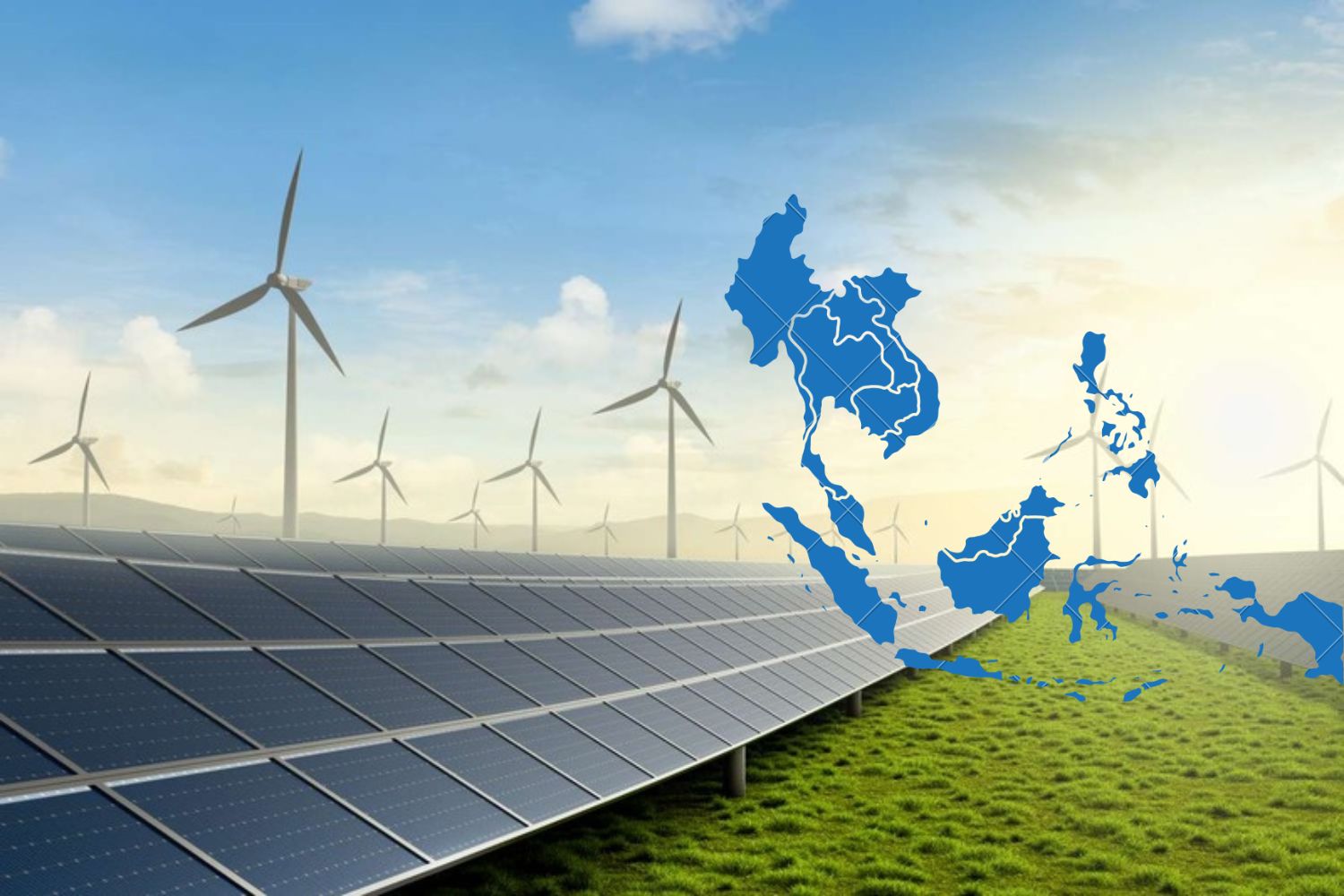
As Southeast Asia emerges as a global hub for digital infrastructure, the rapid expansion of data centres could usher in an unforeseen environmental challenge: a dramatic rise in electricity demand, and with it, carbon emissions. Data centre electricity consumption across key ASEAN markets is projected to surge in the coming decade, driven by growth in cloud computing, artificial intelligence (AI) workloads, and regional digital transformation. Without a shift toward renewable energy and efficiency measures, this demand risks anchoring the region’s climate goals to fossil fuel-based power systems, undermining broader sustainability commitments.
This article examines why emissions risk is rising, how renewables and procurement mechanisms can help, and what role efficiency measures must play to ensure ASEAN’s data centre growth is aligned with long-term clean energy transitions.
Digital Demand: A Massive New Load on ASEAN Grids
ASEAN is witnessing an unprecedented surge in demand for data centre capacity. Six major economies, Indonesia, Malaysia, the Philippines, Singapore, Thailand, and Vietnam, now constitute the core of the region’s data infrastructure pipeline, with close to 2.9 gigawatts (GW) of new capacity under development.
In this context, electricity consumption forecasts point to dramatic increases. Take Malaysia as a striking example: data centre electricity use is projected to grow from around 9 terawatt-hours (TWh) in 2024 to as much as 68 TWh by 2030, equivalent to roughly a third of the country’s total expected electricity demand and exceeding Singapore’s entire power consumption in 2023.
Such growth has a direct carbon implication. Because most ASEAN power grids still depend heavily on coal and gas, increased electricity demand from digital infrastructure could translate into a sevenfold increase in associated carbon dioxide equivalent emissions (CO₂e) in Malaysia alone by 2030, rising to an estimated 40 million tonnes. This trajectory is mirrored across the region: the Philippines could see emissions rise more than 14-fold, while Indonesia’s data centre emissions are projected to quadruple.
Why Fossil Dependence Matters
While data centres themselves are digital infrastructure, their physical operations, server processing, cooling, storage and network systems, depend on substantial amounts of electricity. In ASEAN today, the majority of that electricity is still generated by coal and natural gas plants, especially in countries like Indonesia and the Philippines.
This dependence means that data centres risk becoming unintended accelerators of fossil fuel consumption, trapping national grids into higher emissions trajectories even as governments pursue clean energy goals. Moreover, as digital demand rises, compounded by AI and cloud computing, the strain on existing grids could grow faster than renewable capacity deployments, creating a mismatch between digital growth and clean energy availability. Without intervention, ASEAN’s digital sector could inadvertently lock in long-term emissions commitments through infrastructure decisions made today.
Renewables: A Clear Path Forward - If Policy Supports It
Despite these rising emissions risks, a clear pathway to decarbonization exists, and it begins with renewables. According to a recent report by energy think tank Ember, solar and wind power could meet up to 30% of ASEAN data centres’ electricity demand by 2030 through grid-based generation alone, before even accounting for energy storage solutions.
This finding is significant for two reasons:
- Battery storage is not strictly necessary in the near term: High battery costs are often cited as a barrier to renewable adoption, but an adequate mix of grid-integrated solar and wind can supply a substantial portion of electricity demand without storage.
- Policy frameworks and market access are pivotal: Achieving this 30% renewable potential requires robust renewable procurement mechanisms, including power purchase agreements (PPAs), virtual PPAs, green tariffs, and expanded access to grid-connected renewables for smaller operators beyond large multinational tenants.
For example, global tech players like Alphabet’s Google have begun securing long-term renewable supply deals in ASEAN: a 21-year renewable power purchase agreement (PPA) with TotalEnergies will supply approximately 1 terawatt-hour (TWh) of solar power to Google data centres in Malaysia, giving the company price stability and clean-power assurances. Such agreements demonstrate that corporate renewable procurement can be a potent mechanism for aligning digital infrastructure growth with clean energy deployment, but access remains uneven across countries and operators.
Beyond Power: Efficiency as a Strategic Lever
Renewables alone are not enough. Efficiency measures, especially for cooling and load management, are critical to lowering overall demand and emissions. In tropical climates like Southeast Asia, cooling systems can account for up to 39% of a data centre’s electricity use, making them a priority target for optimization.
The Ember report highlights several strategies that can significantly reduce energy intensity:
- Optimized airflow and design changes to improve cooling efficiency.
- Higher operating temperature thresholds where feasible, reducing cooling load.
- Advanced cooling technologies such as immersion cooling, which can cut energy use by up to ~40% compared to traditional approaches.
Data centre operators that integrate energy efficiency into their designs, rather than retrofitting it after construction, can significantly reduce the carbon footprint associated with digital resource requirements. This approach is particularly critical in ASEAN, where grid flexibility and renewable capacity are still evolving.
Scenarios: Business-as-Usual vs. Accelerated Clean Growth
To illustrate the stakes, consider two distinct scenarios for ASEAN’s data centre sector:
1. Business-as-Usual (BAU):
- Heavy reliance on fossil fuel-dependent grids.
- Limited access to renewable procurement mechanisms.
- Slow deployment of energy-efficient technologies.
Result: Exponential growth in carbon emissions tied to data centre electricity demand, potentially offsetting national and regional climate commitments.
2. Accelerated Clean Growth:
- Expanded access to PPAs, virtual PPAs and green tariffs for all operators.
- Focused grid planning to integrate solar and wind capacity.
- Early adoption of high-efficiency designs and cooling systems.
Result: Decoupling data centre growth from carbon emissions, positioning ASEAN as a leader in sustainable digital infrastructure.
The difference between these two paths is not just environmental; it has economic and social implications. Countries that facilitate effective renewable procurement and efficiency integration will attract more sustainable investments, reduce long-term energy costs, and maintain compatibility with global corporate climate commitments such as RE100 and net-zero targets.
Policy and Market Imperatives for Clean Digital Growth
To accelerate clean growth, ASEAN policymakers and industry partners need to implement several critical reforms:
- Strengthen renewable procurement access: Expanding PPAs, virtual PPAs, and green tariffs across all markets — not just in Singapore or Malaysia, would broaden the clean energy supply base available to data centre operators.
- Design national data centre frameworks: Incentivize energy-efficient design and renewable procurement through codes, standards, and certification programs.
- Regional cooperation on grid planning: Cross-border interconnections and coordinated market reforms can optimize renewable deployment across ASEAN and mitigate transmission bottlenecks.
- Support smaller operators: Enable access to flexible procurement mechanisms so that sustainability is not limited to tech giants, but also benefits regional and local operators.
ASEAN’s data centre boom represents both an opportunity and a challenge. The region’s growth in digital infrastructure can fuel economic development, technological leadership, and global connectivity. However, unchecked expansion powered by fossil fuel-dependent grids risks entrenching a new emissions source that could undermine broader climate ambitions.
Renewables and efficiency are no longer optional add-ons, they are strategic imperatives for ensuring that digital growth aligns with energy transition goals. Solar and wind alone could supply up to 30% of data centre electricity demand by 2030 with current grid potential. When coupled with strong renewable procurement frameworks and aggressive efficiency measures, ASEAN has a clear pathway to decarbonize its digital growth and become a model for sustainable infrastructure in the digital age.
References
- Ember report on ASEAN data centres and renewable energy potential: solar and wind could meet up to 30% of demand by 2030.
- Projections of data centre electricity demand growth from 9 TWh to 68 TWh in Malaysia by 2030 and associated emissions increases.
- Context on renewable procurement mechanisms and challenges in ASEAN.
- Regional policy implications and the need for national frameworks, market access, and energy efficiency.
- Energy efficiency opportunities including cooling optimization and advanced technologies.
